The Trilateral Alliance: Why My Analysis Went Viral in the Horn
Beyond the Addis Standard headlines: A Japanese-Zionist perspective on the new Red Sea security architecture.
By Hiroko Kasai
Fukuoka, Japan | April 12, 2026
The “Director’s Cut”
This week, my latest analysis for Addis Standard, “From Tokyo to Addis: Trilateral Alliance Redefining Red Sea Security,” took on a life of its own. From trending on news feeds in Ethiopia to triggering heated emails from journalists in Somaliland, it is clear that the “Pacific-Abrahamic Axis” has touched a raw nerve in global geopolitics.
While I am grateful to the editors in Addis Ababa for providing a platform, a 1,200-word op-ed is often just the “abstract.” Here on my Substack, I am releasing the unedited strategic vision—the one that legacy media in Tokyo is still too cautious to publish.
The Reality of 2026: Why Now?
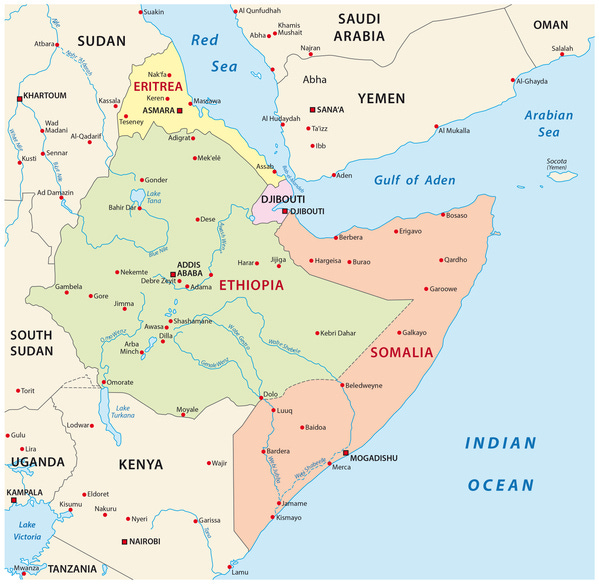
We are no longer living in the era of “One Somalia” or “Quiet Diplomacy.” Since Israel’s historic December 26, 2025, recognition of Somaliland and Foreign Minister Gideon Sa’ar’s landmark visit to Hargeisa in January, the map has changed.
For Japan, this isn’t just a distant African story. As a Zionist Japanese analyst, I see the survival of Israel and the sovereignty of Somaliland as two sides of the same coin: the right of stable, democratic civilizations to exist and secure their own borders.
The Three Pillars of the Axis:
1. The Berbera Corridor as a Japanese Lifeline
Japan’s national resilience (Keizai Anzen Hosho) depends on the Bab el-Mandeb. While our MSDF base in Djibouti remains vital, we cannot ignore the 850 kilometers of stable Somaliland coastline. Ethiopia’s quest for sea access through Berbera is perfectly aligned with Japan’s Free and Open Indo-Pacific (FOIP) vision. We are moving from “patrolling” to “infrastructure building.”
2. The “Silicon-to-Manufacturing” Pipeline
With the establishment of the “Japan Desk” at the Ethiopian Investment Commission (EIC) this January, the economic logic is clear. Israel provides the “tech brain” (Pax Silica), Japan provides the industrial “muscle,” and Ethiopia/Somaliland provides the strategic gateway to the 1.4 billion people of the AfCFTA.
3. Principled Realism vs. Failed Orthodoxies
To my critics, like those who called my analysis “insulting”: True respect for the Horn of Africa means recognizing functional governance. Propping up failed-state orthodoxies in Mogadishu at the expense of Hargeisa’s 35-year success is not diplomacy—it is a strategic blind spot that invites chaos.
Read the full article:
“From Tokyo to Addis: Trilateral alliance redefining Red Sea security”
https://addisstandard.com/from-tokyo-to-addis-trilateral-alliance-redefining-red-sea-security/
Why I am Writing Independently
I have chosen to operate outside the traditional Japanese media framework because the challenges of 2026 require an unfiltered truth. Japan needs partners who are as resilient and tradition-bound as we are. In the “islands” of Israel and Somaliland, I see our natural civilizational peers.
Coming up next week for subscribers:
An exclusive look at the “Japan Desk” in Addis: What B2B leaders are saying behind closed doors.
The Kenya Pivot: Why Nairobi is the next node in the Pacific-Abrahamic corridor.