Dear Subscribers
As Jewish communities in Israel and around the world prepare to observe Rosh Hashanah, I extend my warmest wishes to everyone celebrating.
May the New Year bring you and your loved ones peace, good health, renewed strength, and many moments of sweetness. To those carrying grief, uncertainty, or worry, may the coming year offer comfort and hope. To those separated from family and friends, may it bring reunion. And to all who long for peace, may that hope become more than a prayer.
Shana Tova U’Metuka—may you have a good and sweet New Year.
What Is Rosh Hashanah?
Rosh Hashanah is the Jewish New Year and one of the most significant occasions in the Jewish calendar. The Hebrew name Rosh Hashanah literally means “head of the year.”
The holiday begins on the first day of Tishrei, the seventh month of the Hebrew calendar, and is traditionally observed for two days. Because the Jewish calendar follows lunar and solar cycles, its dates vary each year on the Gregorian calendar.
Although Rosh Hashanah welcomes a new year, it differs greatly from secular New Year celebrations on December 31. It is not primarily an occasion for parties, fireworks, or countdowns. It is a sacred time of prayer, reflection, moral responsibility, and spiritual renewal.
Rosh Hashanah invites people to look back honestly at the year that has passed and consider how they might live more meaningfully in the year ahead.
A Time of Reflection and Accountability
In Jewish tradition, Rosh Hashanah is also known as the Day of Judgment. It begins the Yamim Nora’im, or Days of Awe—a ten-day period that concludes with Yom Kippur, the Day of Atonement.
These days encourage self-examination. People reflect upon their choices, relationships, responsibilities, and failures. They may seek forgiveness from those they have hurt and consider how they can repair what has been damaged.
This is one of the most profound messages of Rosh Hashanah: a new beginning requires more than turning a page on the calendar. It asks for honesty, humility, and a willingness to change.
The holiday reminds us that renewal remains possible. People cannot undo the past, but they can acknowledge it, learn from it, make amends, and choose a better direction.
The Sound of the Shofar
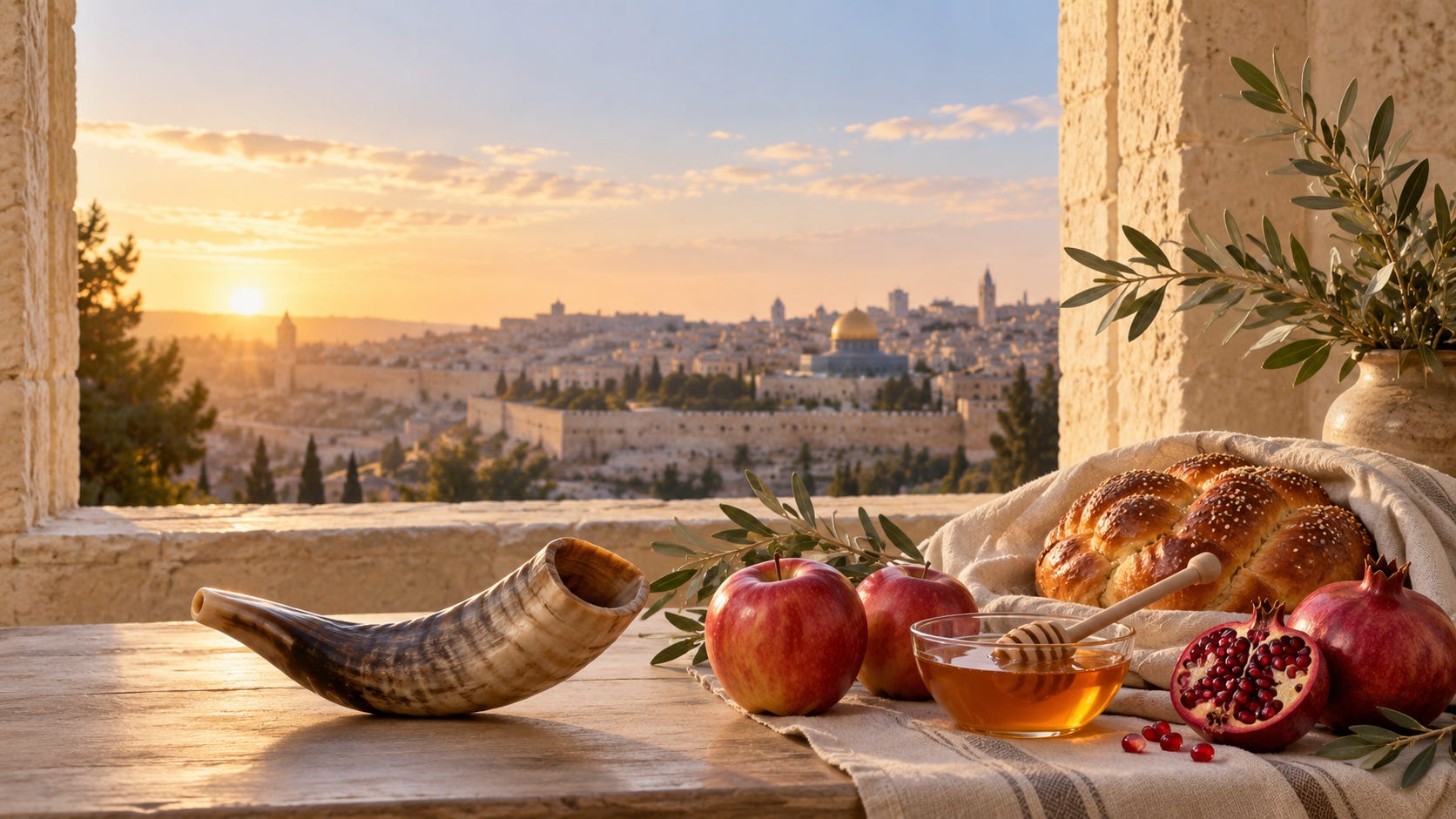
One of the most recognizable traditions of Rosh Hashanah is the sounding of the shofar, an ancient instrument usually made from a ram’s horn.
Its powerful and distinctive sound serves as a spiritual call to awaken. It urges listeners to pause, examine their lives, and return to what truly matters. The shofar can be understood as a call to conscience, repentance, courage, and renewed purpose.
Its voice is simple, yet deeply moving. It carries no elaborate melody and needs no words. Instead, its sound breaks through distraction and complacency, reminding people that time is precious and that moral choices matter.
In a world overwhelmed by noise, the shofar offers a different kind of message: wake up, remember, reflect, and begin again.
Apples, Honey, and the Hope for a Sweet Year
Food plays an important symbolic role in Rosh Hashanah observances.
Apples are traditionally dipped in honey to express the hope that the coming year will be sweet. Pomegranates are also associated with the holiday. Their many seeds symbolize abundance, blessings, and good deeds.
Round challah bread is commonly served, with its circular shape representing the year's continuing cycle. Families and communities may include other symbolic foods according to their cultural traditions.
These customs are beautiful because they transform hope into something tangible. Sweetness is not merely spoken about—it is tasted and shared around the table.
The traditional greeting Shana Tova U’Metuka means “a good and sweet year.” The sweetness refers not only to comfort or prosperity, but also to the hope for a year filled with kindness, meaningful relationships, peace, and blessings.
Prayer, Community, and Renewal
Many Jewish people attend synagogue services during Rosh Hashanah, where special prayers and readings focus on divine sovereignty, remembrance, judgment, and hope.
Another tradition associated with the holiday is Tashlich, during which people gather near a natural body of flowing water and symbolically cast away their sins. This practice represents the desire to leave wrongdoing behind and move forward with a renewed heart.
Rosh Hashanah is also a time for families and communities to gather. Families share meals, light candles, recite blessings, and reflect on what they hope the new year will bring.
Even amid hardship, the holiday affirms that life can be renewed. It does not ignore suffering or uncertainty. Rather, it asks people to confront them with faith, responsibility, courage, and hope.
A Message That Reaches Beyond One Community
Rosh Hashanah is distinctly and deeply Jewish. Its religious meaning, prayers, and traditions must be understood and respected within that context.
At the same time, its themes carry a message that can be appreciated more broadly: examine how we have lived, repair what we can, value our relationships, and enter the future with humility and hope.
In public and private life, renewal requires responsibility. Peace requires more than words. Reconciliation requires truth. A better future depends upon the choices people make today.
The New Year offers an opportunity to ask important questions:
Have we listened carefully to others?
Have we acted with compassion?
Have we used our voices responsibly?
Have we defended truth and human dignity?
What can we do differently in the year ahead?
These questions are especially meaningful during times of division, conflict, and uncertainty.
My Rosh Hashanah Wish for You
To my Jewish subscribers, readers, colleagues, and friends in Israel and around the world: thank you for letting my writing be part of your lives.
Your readership and support make independent writing possible. Every subscription, message, comment, and shared article reminds me that thoughtful dialogue still matters.
As a new year begins, I hope we can continue seeking truth, listening carefully, and refusing to surrender our belief in a more peaceful future.
May the coming year bring healing to those who are suffering, comfort to those who mourn, protection to those in danger, and strength to everyone working for a better world.
May families be reunited. May communities find renewal. May courage overcome fear, and may hope endure even in the most difficult moments.
Shana Tova U’Metuka.
May you and your loved ones be blessed with a good, peaceful, healthy, and sweet New Year.
With warmest wishes,
Hannah Klein


