

Haviva Reik had already escaped the Europe that intended to destroy her.
In 1939, she left her native Slovakia and made aliyah to Mandatory Palestine. There, she joined the emerging Jewish national community, helped build a kibbutz, worked the land, and became a member of the Palmach.
She possessed what millions of European Jews desperately sought but could not obtain: a way out.
Yet in 1944, as Nazi Germany continued its destruction of European Jewry, Haviva chose to return.
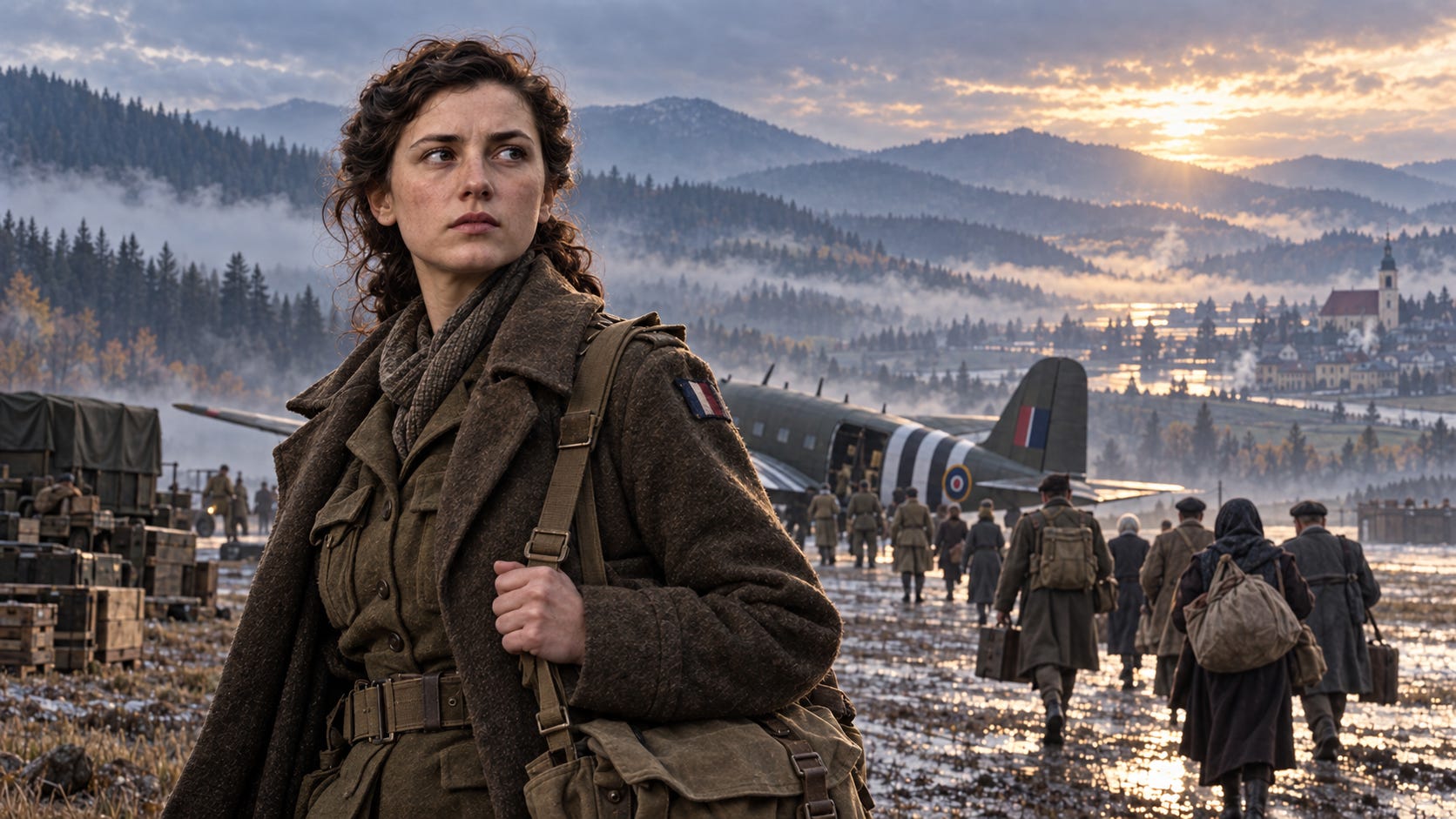
She did not return as the vulnerable young Jewish woman she might have become under Nazi rule. She returned in British uniform, trained for a clandestine mission and carrying the resolve of the Jewish community being built in the Land of Israel.
Her destination was Slovakia—the country of her childhood, where Jews had been isolated, deported, and murdered.
Her mission combined military intelligence, resistance, rescue, and an intensely personal obligation to the Jewish people she had left behind.
Haviva Reik would not survive the war. But before her murder at the age of 30, she transformed Zionism from an aspiration into an act of responsibility.
Before Haviva, There Was Marta
Haviva Reik was born Marta Reik in 1914 and grew up near Banská Bystrica in what was then Czechoslovakia.
Her childhood was not privileged. She learned responsibility early and began working at a young age. These experiences may have helped form the practical strength that later defined her leadership. She understood that ideals meant little unless she translated them into action.
As a young woman, she joined Hashomer Hatzair, the socialist Zionist youth movement.
Like other Zionist organizations of the period, Hashomer Hatzair offered young Jews more than a political position. It offered community, education, collective identity, and a vision of Jewish life beyond Europe's vulnerability.
Its members studied Hebrew, Jewish history, agriculture, socialism, and the possibility of building a new society in the Jewish ancestral homeland. They were encouraged to think of themselves not merely as individuals seeking personal security, but as participants in a shared Jewish future.
Marta adopted the Hebrew name Haviva, meaning “beloved.”
The change was more than symbolic. It reflected the new identity she was developing—one connected to Hebrew culture, Zionist purpose, and Jewish national renewal.
As antisemitism intensified and Europe moved toward war, the Zionist dream became increasingly urgent. Haviva helped Jewish refugees and supported efforts to immigrate to Mandatory Palestine.
In 1939, she made aliyah.
Building a Jewish Future
In Mandatory Palestine, Haviva joined the group that established Kibbutz Ma’anit.
Kibbutz life required physical labor, discipline, and a willingness to place collective needs ahead of personal comfort. Haviva reportedly insisted on participating in demanding agricultural work. She labored in orchards, vineyards, and fields while becoming increasingly active in the life of the Yishuv—the organized Jewish community in Palestine.
This part of her story is essential.
Haviva did not arrive in Palestine merely to find safety. She came to help construct a Jewish society.
For Zionist pioneers of her generation, building a kibbutz was not separate from resistance. Cultivating land, creating Hebrew institutions, organizing communal defense, and establishing permanent Jewish communities were all expressions of the same refusal to remain powerless.
Europe had taught Jews that citizenship and assimilation could not always protect them. The Yishuv attempted to create something different: a society in which Jews would assume responsibility for their own security and future.
Haviva joined the Palmach, the elite strike force of the Haganah.
She trained, accepted military discipline, and prepared herself for dangers that would once have seemed unimaginable for a young Jewish woman from Slovakia.
But even as she helped build a new life, Europe remained with her.
The Jews she had left behind had not disappeared from her conscience.
The Call to Return
During the Second World War, British authorities and the Jewish Agency developed a program to send Jewish volunteers from Mandatory Palestine into Nazi-occupied Europe.
The British needed operatives who spoke local languages, understood the terrain, could assist Allied personnel, gather intelligence, and communicate with resistance movements.
The Jewish leadership in Palestine saw an additional purpose.
These volunteers might reach Jewish communities trapped behind enemy lines. They could bring information, encouragement, organization, and, wherever possible, practical assistance.
Approximately 250 people initially volunteered. A smaller number received specialized instruction, and only several dozen eventually entered occupied Europe.
The training was demanding. Volunteers learned parachuting, radio communications, intelligence work, clandestine movement, and methods of surviving behind enemy lines.
Haviva wanted to be sent to Slovakia.
She knew its language, culture, and geography. More importantly, she regarded the Jews there as her people and their suffering as her responsibility.
She had already reached safety. No one could reasonably have demanded that she return.
She volunteered anyway.
That decision stands at the center of her story.
What does a person owe those who remain trapped after she has escaped? Is survival a private possession, or can it create an obligation toward others?
Haviva answered through her actions.
The Jewish home being built in Palestine had protected her. Now she would carry something of its emerging strength back into Europe.
